Then It Turned Out to Be HSP
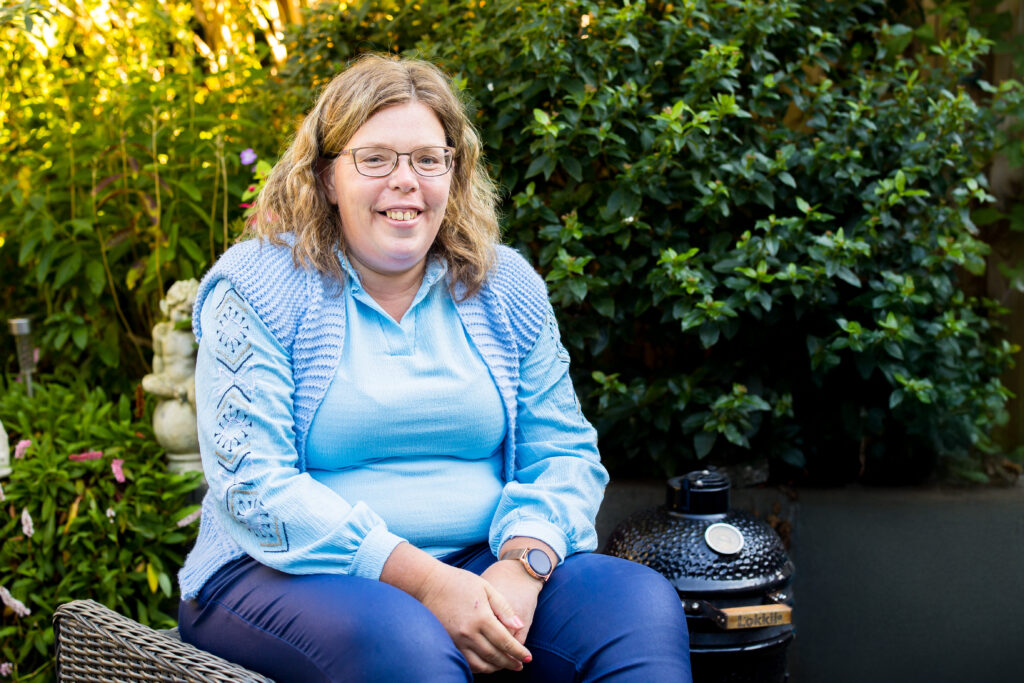
Elizabeth Witteveen Rhijnsburger (43) lives together with her husband Jan Peter in Zeewolde. Together they form a loving family with their dog Puk and cats Bram and Pien. “To us, they truly feel like our children,” Elizabeth says.
Drie jaar geleden kreeg Elizabeth de diagnose HSP. Daar ging echter een lange periode van onzekerheid aan vooraf. “Ik had al eerder een andere diagnose gekregen, namelijk ALS, maar mijn klachten werden steeds erger. Ik werd stijver, lopen ging moeilijker en ook praten kostte steeds meer moeite. Daarom ben ik voor een second opinion naar het UMC Utrecht gegaan.” Bij de afdeling Neuromusculaire Ziekten werd verder onderzoek gedaan. Uiteindelijk kwam daar de diagnose HSP uit.
“For my husband and me, that was a very tense period. You surrender yourself to the expertise of doctors while at the same time living with the uncertainty of what the outcome will be.”
Living with HSP
The disease has a major impact on Elizabeth’s daily life. “HSP affects virtually everything. I need care 24 hours a day. My husband takes care of me and even had to give up his job because he became increasingly worried and I can no longer be left alone.”
“The biggest challenge for me is that I need a lot of help and only have about 25 percent of my energy left. That means I have to make choices every single day. I find that difficult, because energy is such an intangible thing. You only realize how valuable it is when you gradually lose it. Since receiving the HSP diagnosis, a lot has changed. On the one hand, I’m not getting better, but on the other hand, all the puzzle pieces finally fell into place. That gives me peace of mind and helps me mentally.”
Several muscle diseases occur in her family, although HSP was never officially diagnosed before. “It goes back five generations, always from mother to daughter. Sadly, my mother and grandmother have passed away, so I can no longer talk to them about it.”
Enjoying the Small Things
Elizabeth speaks openly about the changes in her life. “I’ve increasingly found my rhythm in daily life, although it still remains a challenge at times. That’s also because I’m quite stubborn. At 28, I was declared permanently unfit for work. I found that very difficult to accept. It felt as though I suddenly received a label. Even so, I continued doing volunteer work, but when that eventually became impossible too, I had to stop that as well. With HSP, you constantly have to adapt yourself again whenever your condition worsens. That isn’t easy.”
Despite everything, Elizabeth consciously tries to enjoy the little things in life. “Nowadays, I enjoy small things. I love reading books and magazines from the library, watching television to relax, and sitting outside in my wheelchair when the weather is nice. I was raised with faith, and I draw a lot of strength from it. I’ve also learned to appreciate small moments, like blossoming fruit trees or birds flying by.”
My Message to Others
Elizabeth believes it is important for people to know more about HSP. “What others should know about HSP is that it is a progressive disease. Fortunately, there are good aids and possibilities for symptom management that can support daily life.”
“To other people with HSP, I would say: try to enjoy the small things. Focus on what you still can do and find happiness in that. Life is far too short.”
Carpe Diem.
 English (UK)
  Nederlands
  Français
  Italiano
  Deutsch
  Español