Eleven Family Members Living with Hereditary Spastic Paraplegia: Joost and Mariska Share Their Story
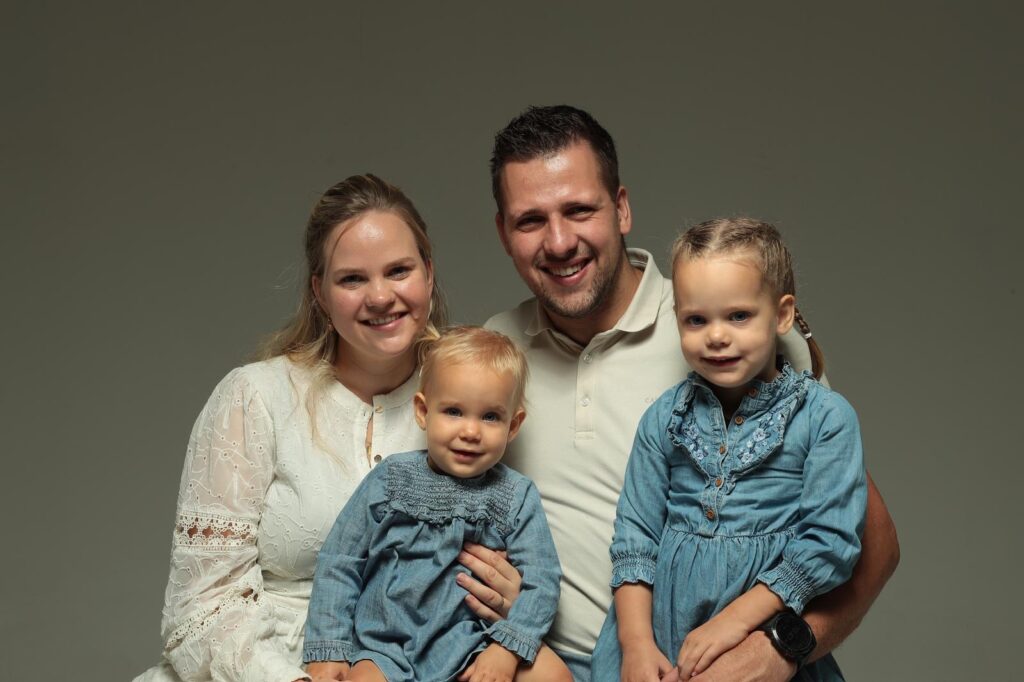
Joost and Mariska are parents to two young children and try to lead as normal a life as possible. They work, take care of their family and enjoy the everyday moments they share. At the same time, there is an inherited condition that runs like a common thread through their family: hereditary spastic paraplegia (HSP).
So far, eleven members of their family have been diagnosed with HSP. The condition affects multiple generations and has had a significant impact on their family history. Yet Joost and Mariska mainly want to show what is still possible. “You can look at it very negatively, but that doesn’t change the disease. We try to focus on what we can still do.
A Diagnosis That Explained a Lot
It was only a few years ago that the family discovered that HSP was present in their family. Mariska’s eldest brother was the first to develop symptoms. This prompted medical investigations, which eventually led to her mother receiving the same diagnosis. Looking back, many pieces of the puzzle began to fall into place.
“My mother had always been a little stiff, but nobody really thought much of it at the time,” Mariska explains. “It was only when her symptoms became more noticeable in her early fifties that it became clear she had HSP.” Her mother is now almost seventy. She can still walk short distances around the house, but uses a rollator or mobility scooter for longer distances.
HSP Across Three Generations
Eleven members of the family are now known to carry the same genetic variant, spanning three generations: from grandmother to her children and now her grandchildren. And the number may not stop there. “There are still young children being assessed, or children we wonder might also have HSP. Not everyone wants to be tested when they have no symptoms yet, and we understand that. Everyone has to make their own decision.” The genetic variant in this family is known as SPG4, and the family members who have been tested have the same variant. This also raises questions for Joost. “You read that HSP is a rare condition. But when eleven members of your own family have the same condition, you start wondering: are there other families where HSP affects so many people across several generations? We would really like to know.”
Living with HSP
Mariska works twenty hours a week at the Wilhelmina Children’s Hospital, caring for premature babies. At present, her own symptoms are relatively mild. “I notice that I feel stiffer after sitting or sleeping for a long time. Sometimes I get cramps in my legs. Looking back, I can also recognise things from my childhood. I struggled with certain activities in PE at school, and when shopping, I often had to sit down for a while more frequently than my friends. At the time, I didn’t think much of it.” Despite her diagnosis, she tries to stay active. She exercises every week and naturally gets plenty of movement in her daily life with two young children. “Thankfully, things are going well for now. Of course, I pay close attention to my body, but above all, I try to keep doing what I can.”
 Their Daughter Has HSP Too
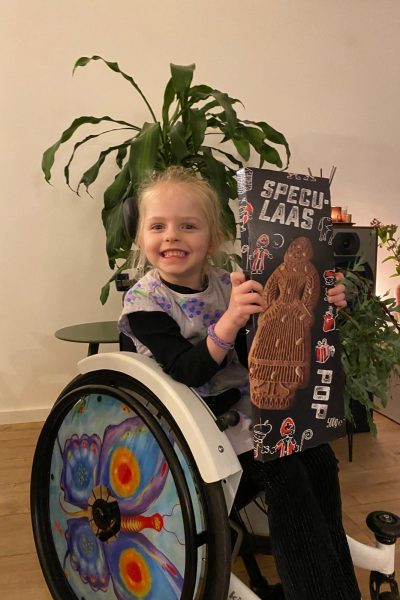
The condition does not only affect the older generations. Their daughter carries the same genetic variant. Her development is being closely monitored by specialist centres, including Radboudumc and Amsterdam UMC. Gait analyses have helped specialists gain a better understanding of her walking pattern. They have also recommended aids, such as daytime and nighttime splints, to support her mobility as much as possible. At school, Joost and Mariska mainly want their daughter to be able to enjoy being a child. “She takes part in PE and plays with the other children, and she does really well. She does tend to fall a little more often, for example when running. But she always bravely gets back up and carries on playing.”
Learning from Each Other
Dat HSP bij zoveel familieleden voorkomt, zorgt ook voor verbondenheid. Ervaringen worden gedeeld, behandelingen besproken en nieuwe ontwikkelingen uitgewisseld. “Je merkt dat je veel van elkaar leert. We wisselen ervaringen uit over behandelingen, hulpmiddelen en hoe iedereen met de ziekte omgaat. Dat geeft herkenning en steun.” Voor Joost en Mariska is één ding belangrijk: HSP mag niet de hoofdrol spelen. “De ziekenhuisafspraken horen erbij, maar ze bepalen niet ons leven. We proberen zoveel mogelijk van dag tot dag te leven en vooral te kijken naar wat wél kan.”
Hope for the Future
Although there is currently no cure for HSP, Joost and Mariska closely follow developments in research. They hope that further research will eventually lead to better treatments and more possibilities for people living with HSP. They are sharing their story mainly in the hope that other families will recognise something of their own experiences in it.
“Are there other families like ours, where HSP affects so many family members across several generations? We hope our story will help raise awareness and encourage more research into this rare condition.”
 English (UK)
 Nederlands
 Français
 Italiano
 Deutsch
 Español