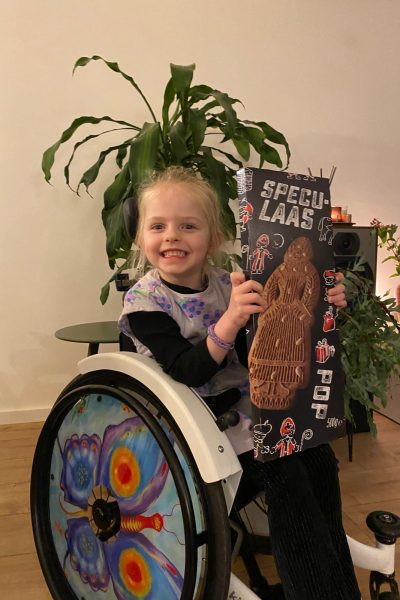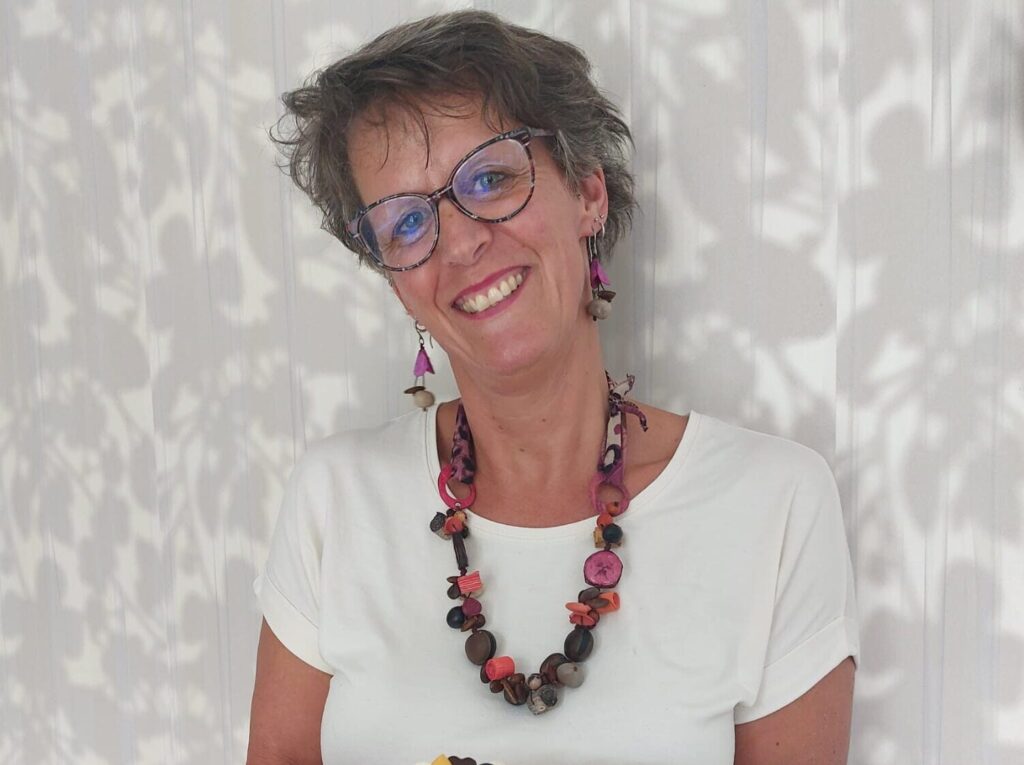
Helma (52) lives with the working diagnosis of HSP: hereditary spastic paraplegia. Walking is becoming increasingly difficult. Yet she says, "My life is okay!" This is her story, in her own words.
"Heels first, then your toes." I can still hear my mother saying it. As a child, I was clumsy and struggled with coordination. I tripped a lot, spent every summer with at least one scraped knee, and during gym class I was usually one of the last to be picked for a team. And whenever I laughed really hard and slapped my knee, my leg would jerk upward in a reflex. The years went by without too many changes—until I was 25, when hiking in the mountains with my husband became much harder than I wanted it to be. Nordic walking poles helped for a while.
Twenty years later, I was sitting in a neurologist's office
My back hurt, and walking was becoming more and more difficult. The neurologist examined me and suspected HSP, but the DNA test didn't confirm it. What was going on? The uncertainty made me anxious. Fortunately, my back pain gradually improved, but walking continued to get harder. So five years later, I returned to the neurologist. My symptoms matched HSP, yet once again the DNA test showed nothing. The conclusion was that I probably have a genetic variant that has not yet been identified. Since then, I have been living with a working diagnosis.
I felt relieved. I wasn't imagining things after all. My symptoms had a name. There really was something wrong, and I no longer had to set impossibly high expectations for myself. Some things I simply can't do anymore—or not as well as I used to.
It also affects our children. Could they have HSP too? We don't know. Since my genetic mutation can't be identified, there's nothing specific to test for in them. Thankfully, their walking pattern and reflexes are normal.
I accept every bit of help I can get. My physical therapist stretches and exercises with me. My occupational therapist helps me find the right balance between what I can do and what my body can handle. An orthotist makes ankle-foot orthoses for me. A social worker helps me process the diagnosis. And my rehabilitation physician keeps track of how I'm doing.
How much longer will I be able to climb the stairs?
About a year after receiving my working diagnosis, it really sank in: this disease would change my future. How much longer would I be able to live in our house with its stairs? Would I be able to keep working? Thinking about the future made me sad.
A psychologist helped me find a place for that sadness. I can't honestly say I've accepted the disease, because of course I'd rather be healthy. But I can say that I've come to terms with it. My life is good as it is, and I can enjoy it again. What also helps is that I've stopped fighting against the things I can no longer do. Trying to keep doing everything, even when it's no longer possible, simply takes too much energy. I ask for help. I accept help. And I'm getting better at that all the time. That way, I can use my energy to enjoy life.
HSP runs like a colored thread through every day of my life.
Walking no longer comes naturally and takes more and more energy. First, mountain hikes became difficult, then ordinary walks. Now, even getting around the house is often a challenge. Going somewhere isn't something I can do without thinking anymore. What are we going to do? Which mobility aids should I bring? And above all: how should I divide my energy?
I often think, "That should still be possible." It's always confronting when I discover that it isn't. Still, I've found a good rhythm. I divide household chores into manageable tasks. I work fewer hours, and my husband takes on more at home. Our children each have their own responsibilities. Every day, I decide what has to be done, what can be done, and what's realistic. In the afternoon, I close my eyes for a while and rest. I need those moments.
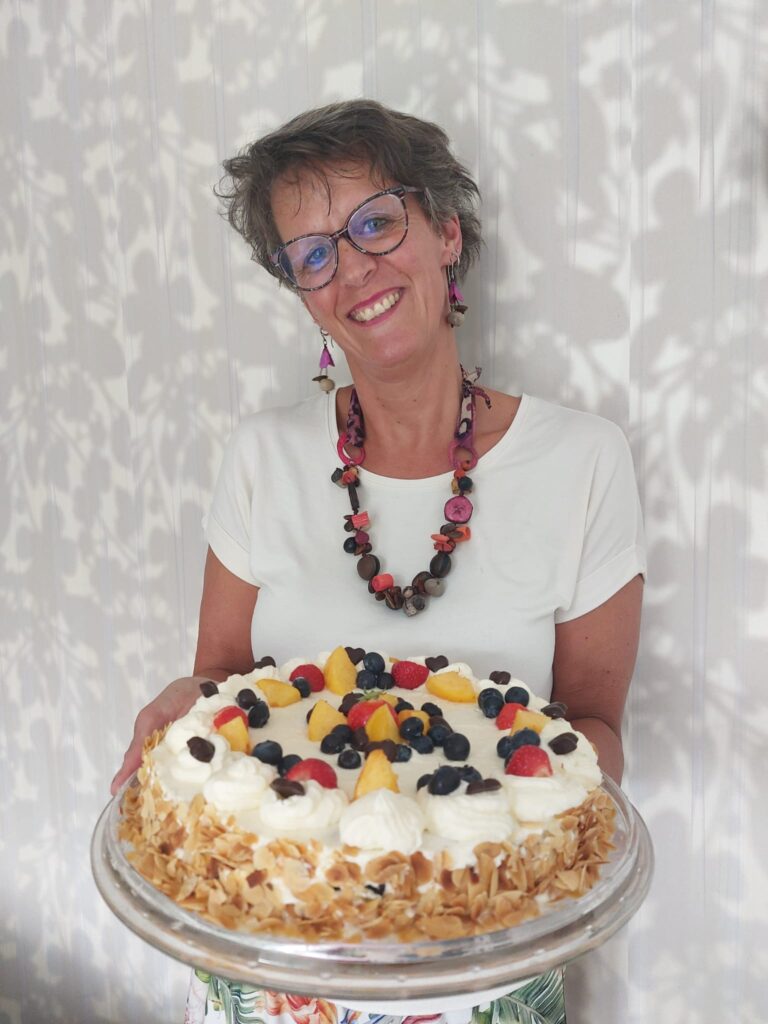 Every weekend, I bake a cake
Preferably a different one every week. I can completely lose myself in searching for new recipes. And if I don't have enough energy for an elaborate cake, I bake something simple instead. I enjoy that just as much.
If you want to know how I'm doing, please ask. But also ask me about other things. Ask what kind of cake I'm going to bake, what I'm working on, or what our vacation plans are. Because I am more than my legs.
I don't know what my future will look like. My faith in God gives me strength and brings me peace when I feel unsettled. I take life one day at a time. There are moments when I cry, but above all I enjoy the small and the big things in life, surrounded by my wonderful husband and our beautiful children. And that's how I face the future—with confidence.
 English (UK)
  Nederlands
  Français
  Italiano
  Deutsch
  Español