Stronger Together Against HSP: A Special EURO-HSP Weekend in the Netherlands
International collaboration, new insights into research and personal stories were at the heart of the EURO-HSP weekend, held from 16 to 18 October in Uithoorn, the Netherlands. Representatives from twelve countries came together with people living with HSP, patient organisations, researchers and other stakeholders to share knowledge, connect with one another and look ahead to the future in the context of World HSP Day.
For three days, the focus was on connection, raising awareness and the shared fight against HSP (Hereditary Spastic Paraplegia). Life4HSP was proud to host this international weekend and looks back on valuable encounters, inspiring conversations and a shared ambition: working towards a future in which HSP can be treated more effectively and, ultimately, stopped.
Getting Moving for HSP
Saturday's programme kicked off with an energetic boxing clinic led by former elite boxer and Olympic medallist Nouchka FontijnParticipants took part in the session together, experiencing how sport can get people moving and bring them closer together.
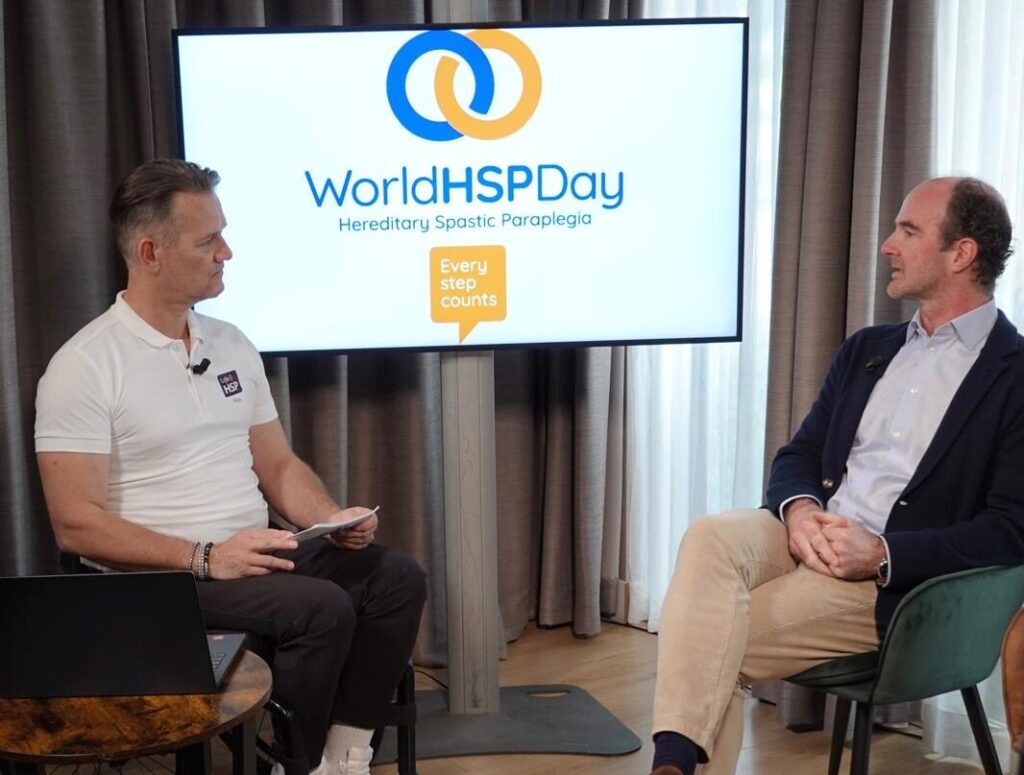
This was followed by an international webinar organised by Life4HSP and EURO-HSP. People living with HSP, researchers and representatives of patient organisations from different countries shared their experiences, knowledge and perspectives. Topics included fatigue, the RE-TRAIN programme presented by Lotte de Venis, ongoing research presented by Professor Bart van de Warrenburg, and international collaboration. There was also room for personal stories, highlighting what living with HSP means in everyday life, the challenges people face on a daily basis and why continued progress in research is so important.
Watch the webinar here again
Research and Collaboration Pave the Way for the Future
During the afternoon programme, participants continued discussions about the current state of HSP research and its future direction. Researchers and EURO-HSP representatives shared updates on research initiatives and projects that contribute to a better understanding of the condition. International collaboration is essential to this progress. By sharing knowledge, experiences and research efforts across borders, patient organisations and researchers can strengthen one another's work.
However, progress also depends on the involvement of people living with HSP themselves. Participants therefore discussed their hopes and expectations for the future. What do we want to have achieved in five years? And what concrete steps can we take over the coming year to move closer to that ambition? The ideas generated during these discussions will form the basis of a joint action plan, enabling participants to continue working towards these goals beyond the weekend.
World HSP Day: Raising Awareness Together
World HSP Day was also a key focus on 17 October. It provided an important opportunity to raise global awareness of HSP and its impact on everyday life.
HSP is a hereditary neurological condition that can cause stiffness, spasticity and muscle weakness in the legs. Walking, moving around and taking part in everyday activities can become increasingly challenging as the condition progresses. That is precisely why visibility, recognition and research are so important. Behind every diagnosis is a personal story, with its own challenges, adjustments and dreams for the future.
The weekend demonstrated the value of sharing these stories and working together. Not only to increase understanding, but also to accelerate progress towards better treatments and, ultimately, stopping HSP.
Moving Forward Together
The EURO-HSP weekend concluded on Sunday with the international members' meeting, where participating countries and representatives continued their discussions on collaboration and ongoing projects. For Life4HSP, the weekend was a valuable opportunity to strengthen international ties, exchange knowledge and look ahead together. Although HSP means something different to everyone affected by the condition, we all share the same ambition.
We want people living with HSP to have hope for the future. We want research to advance. And we want to continue working towards our goal: stopping HSP within ten years.
Thank you to all participants, researchers, speakers, volunteers and partners who helped make this weekend possible. Together, we are taking steps towards a future with more possibilities for everyone living with HSP.
 English (UK)
 Nederlands
 Français
 Italiano
 Deutsch
 Español